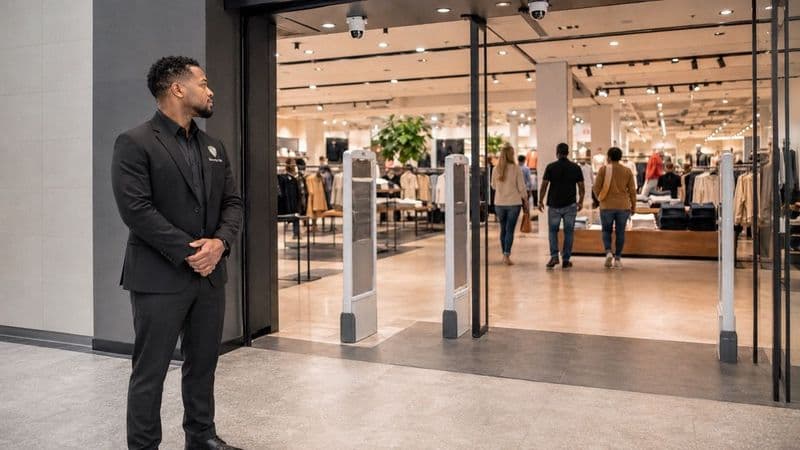

Social Service and Shelter Security Services That Protect Staff, Residents, and Visitors

Social service organizations and shelters operate in environments where security has to support people, not interfere with the mission of the organization.
Staff may be managing intake, helping individuals during difficult circumstances, coordinating housing or social services, receiving visitors, overseeing common areas, and responding to unexpected situations throughout the day.
Security personnel need to understand that environment.
For organizations using professional security services throughout Florida, the right security program can help protect employees, residents, visitors, volunteers, and facilities while maintaining the respectful and supportive atmosphere these organizations depend on.
At Security USA® Inc., we provide security services for social service organizations and shelters built around access control, staff support, de-escalation, patrol coverage, incident response, and the way each facility actually operates.
Security has to fit the environment
A shelter or social-service facility is not the same as a commercial office or residential building.
People may arrive without appointments. Intake areas can become busy. Residents may come and go throughout the day. Staff may be assisting people who are under significant stress. Volunteers, contractors, delivery personnel, and service providers may also need access.
Security has to work within those conditions.
An officer should be able to maintain awareness, enforce facility procedures, assist staff, and respond when necessary without turning every interaction into a confrontation.
The goal is not to make the facility feel restrictive.
It is to create enough structure that staff can focus on providing services while security personnel help manage situations that fall outside normal operations.
Intake and reception areas need clear support
The front desk is often one of the busiest and most sensitive parts of a social-service facility.
New residents or clients may be arriving. Visitors may have questions. Staff may need to explain eligibility, waiting periods, program requirements, or other decisions that can sometimes lead to frustration.
That makes reception and intake areas an important part of the security plan.
Professional security guard services can provide staff with a clear point of support when an interaction begins to escalate beyond normal customer service.
A trained officer can observe the situation, maintain appropriate distance, reinforce facility procedures, assist with access control, and determine when additional support or emergency services are necessary.
That allows staff to continue doing their jobs without being expected to manage every security concern themselves.
De-escalation matters as much as visible security
Not every difficult situation should immediately become a physical security incident.
In many cases, the best outcome is preventing an interaction from reaching that point.
That requires judgment.
Security personnel working in shelters and social-service environments should understand when to observe, when to communicate, when to give someone space, when to involve program staff or supervisors, and when a situation requires a stronger response.
A calm, professional presence can often be more useful than an unnecessarily aggressive one.
That distinction is especially important in environments serving people who may already be experiencing housing instability, financial hardship, family crises, medical concerns, or other difficult circumstances.
Security should protect the facility while still treating people with professionalism and respect.

Staff should know who handles a security concern
Uncertainty can make a difficult situation worse.
A staff member notices someone becoming increasingly confrontational. A visitor refuses to follow an access procedure. An unauthorized person enters an employee-only area. Activity outside the building begins affecting people entering the facility.
Employees should not have to decide from scratch what happens next.
A well-managed security program establishes clear responsibilities.
Staff should know how to contact security, when supervisors become involved, when an incident needs documentation, and when law enforcement or emergency services should be contacted.
Security officers should also understand where their responsibilities intersect with those of case managers, administrators, clinical personnel, or program directors.
That clarity helps prevent situations from being mishandled simply because nobody was sure who should respond.
Access control protects more than the front door
Many shelters and social-service facilities include several different types of spaces under one roof.
Public reception areas may be open to visitors, while residential floors, administrative offices, employee areas, donation storage, kitchens, counseling spaces, and other parts of the facility require tighter control.
Security procedures should reflect those differences.
Visitors should know where they are permitted to go. Employees should be able to access work areas without unnecessary interruptions. Restricted spaces should remain restricted, even during busy periods.
Cameras and access-control technology can help provide additional visibility, particularly around entrances, common areas, parking lots, and other high-traffic locations.
But technology works best when it supports clear procedures and trained personnel.
A controlled door can limit access. A camera can document activity. Security personnel still need to understand what normal activity looks like and how to respond when something falls outside that pattern.
Overnight coverage creates different demands
Shelters and residential social-service programs do not stop operating when traditional business hours end.
The overnight environment can be very different from daytime operations.
Staffing may be lighter. Entrances may be more controlled. Residents may return at different times. Exterior activity becomes more noticeable, and situations that would normally involve several staff members may need to be handled by a smaller overnight team.
Security coverage should reflect those changes.
A facility may need stronger entrance monitoring, interior patrols, exterior checks, or a clearly defined response procedure during periods when fewer employees are on-site.
The important question is not whether every facility needs 24/7 security.
It is whether security coverage matches the periods when the facility actually needs additional support.
Exterior conditions can affect the facility inside
Security concerns do not always begin inside the building.
Loitering near entrances, disputes outside the property, unauthorized vehicles, activity in parking areas, or repeated problems along the property line can affect employees, residents, visitors, and surrounding neighbors.
Professional patrol coverage can help maintain awareness around those exterior areas.
That may include monitoring entrances, parking areas, sidewalks, delivery points, and other locations that influence how people approach or leave the facility.
A consistent exterior presence can also give management better information about recurring concerns instead of relying only on individual complaints.

A practical five-point security check
Social-service organizations and shelters reviewing their current security program should consider five basic questions. These questions help management look beyond whether security personnel are simply present and focus instead on whether coverage is actually supporting the facility’s day-to-day needs. They can also help identify gaps in access control, staff support, overnight coverage, incident response, and communication before those issues become recurring problems. A useful review should reflect how the facility operates during both routine periods and more demanding situations.
- Entrance and intake procedures: Is it clear how residents, clients, visitors, vendors, and other individuals enter the facility?
- Staff support: Do employees know when and how to involve security when an interaction begins escalating?
- Restricted areas: Are residential, administrative, employee-only, storage, and other sensitive spaces appropriately controlled?
- Coverage by time and location: Does security reflect the facility’s actual schedule, including evenings, overnight periods, exterior areas, and higher-traffic times?
- Incident reporting: Are recurring concerns documented well enough for management to identify patterns and make adjustments?
These questions help determine whether the security program is actually supporting daily operations or simply providing visible coverage.
Reporting helps management see the larger pattern
A single incident may not appear significant on its own.
Several incidents involving the same entrance, recurring exterior activity, repeated conflicts during intake, or concerns occurring during the same shift can tell a different story when they are reviewed together.
Consistent reporting gives management that perspective.
It allows security supervisors and facility leadership to identify patterns, adjust coverage, clarify procedures, and determine whether a particular vulnerability needs additional attention.
Our recent Workplace Violence Statistics and What They Mean for Security Planning article discusses why reporting, access control, clear escalation procedures, and trained security personnel should operate as connected parts of a broader workplace-safety program.
For social-service organizations, those principles are especially useful because conditions inside the facility can change quickly.
The right security presence should support the mission
The best shelter security program does not make residents or clients feel as though security is the purpose of the facility.
It allows staff to provide services while security operates in the background as a reliable source of support.
Officers should understand the property, the procedures, the people they work alongside, and the situations that require intervention.
Management should know that concerns will be documented and escalated appropriately.
Staff should know they have someone to turn to when a situation goes beyond their normal responsibilities.
And residents and visitors should be able to use the facility without feeling that safety and dignity are competing priorities.
Build security around the way your facility operates
No two social-service organizations operate exactly the same way.
An emergency shelter, supportive-housing program, community-service center, outreach facility, nonprofit program, and residential social-service organization may all have different staffing, access, schedules, populations, and security concerns.
The security program should reflect those differences.
If your organization needs professional security officers, stronger intake or entrance coverage, overnight support, exterior patrols, access control, or better incident-response procedures, Security USA® Inc. can develop a program around your facility and its daily operations.
Use the form below to discuss security coverage for your social-service organization or shelter.