
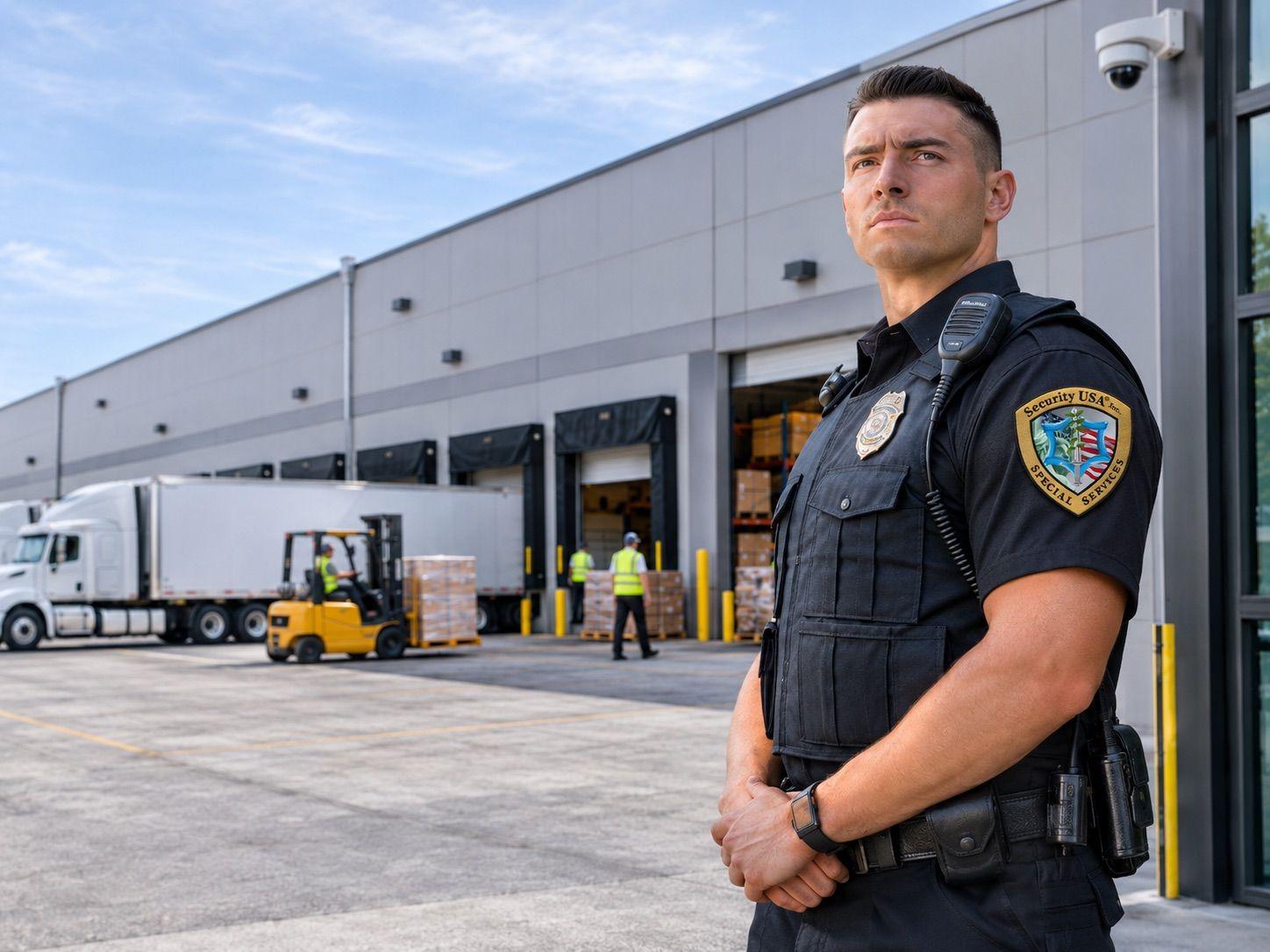
Industrial and Warehouse Security Services That Protect Inventory and Daily Operations
Industrial facilities and warehouses are built around movement. Employees change shifts, trucks arrive and leave, contractors enter the property, equipment is operated, inventory moves between storage areas, and shipments are prepared for delivery. Depending on the facility, much of that activity may continue around the clock. With so much movement, unauthorized access, missing inventory, unsecured entrances, and irregular shipment activity can easily go unnoticed without the right security procedures in place.
For industrial property managers and warehouse operators relying on professional security guard services across New Jersey, maintaining control over that activity is an important part of protecting both valuable assets and operational continuity. At Security USA® Inc., our industrial and warehouse security services combine trained security personnel, access control, patrol coverage, surveillance technology, and site-specific procedures designed around how each facility operates.
Industrial and warehouse security starts with controlling movement
Unlike traditional commercial properties, industrial facilities regularly accommodate several different groups of people and vehicles throughout the day. Employees, truck drivers, delivery personnel, maintenance contractors, temporary workers, and authorized visitors may all require different levels of access. Security personnel need to understand who is authorized to enter, where they are permitted to go, and which procedures apply to their arrival and departure. A well-managed entrance or gatehouse helps facility management maintain greater visibility over activity without creating unnecessary delays for employees, production operations, deliveries, and outgoing shipments. The objective is to maintain accountability while allowing the operation to continue efficiently.
Loading docks and shipping areas require dedicated security procedures
Loading docks are among the most active areas of warehouses, distribution centers, and industrial facilities. They bring together drivers, employees, equipment, merchandise, and commercial vehicles throughout the day. Without clearly defined procedures, discrepancies involving shipments, unauthorized individuals, and inventory movement can become difficult to identify.
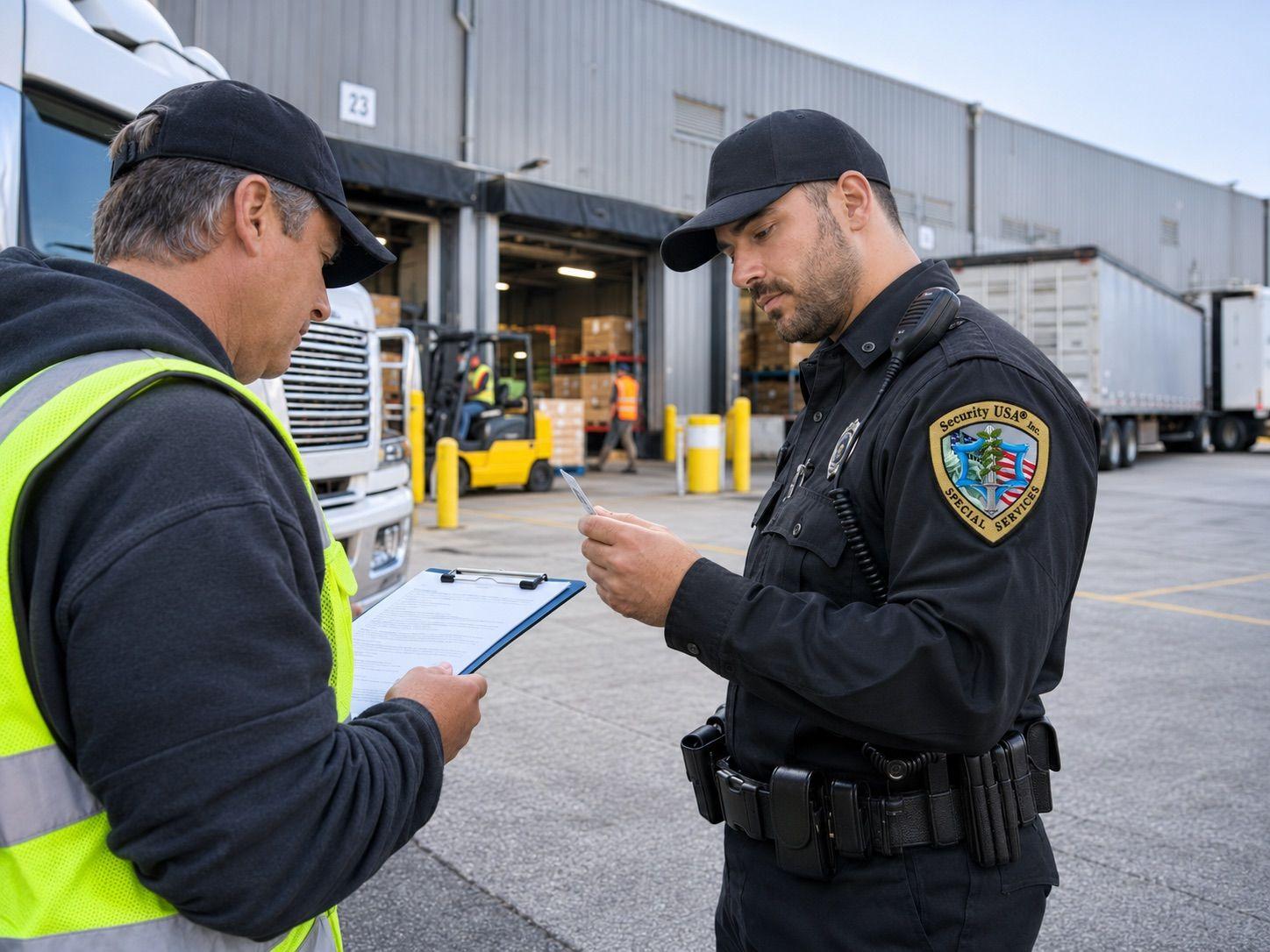
Professional security guards and patrol officers can support these operations by verifying driver authorization, maintaining vehicle activity records, checking shipment documentation according to facility procedures, and reporting irregularities to management. Security responsibilities should also be coordinated with facility supervisors so officers understand which activities require verification and which should be handled by operational personnel. Effective dock security supports the shipping and receiving process rather than becoming an obstacle to it.
Loss prevention involves more than preventing external theft
Industrial and warehouse loss prevention should account for both external and internal risks. Unauthorized access, employee theft, shipment discrepancies, equipment theft, damaged merchandise, and inventory-handling errors can all contribute to financial losses. Not every missing item is the result of criminal activity. However, consistent security procedures and accurate reporting can help management investigate discrepancies and better understand where losses may be occurring. Controlled access to valuable equipment and merchandise, documented movement through restricted areas, and consistent oversight of shipping and receiving activities can strengthen accountability. Security personnel should work alongside facility management and loss prevention teams, with clearly defined responsibilities that support the organization's existing procedures.
Overnight operations require consistent coverage
Some industrial facilities operate continuously, while others experience significant reductions in activity after normal business hours. During quieter periods, fewer supervisors and employees may be available to identify unauthorized activity, unsecured entrances, property damage, or other concerns. Security coverage should reflect those changing conditions. Interior and exterior patrols can help maintain awareness across parking areas, trailer yards, production facilities, storage buildings, and restricted spaces. Officers should also have established procedures for documenting unusual activity and escalating concerns when management is not onsite. For facilities operating multiple shifts, communication between outgoing and incoming security personnel is equally important. A change in shift should not result in a loss of visibility over ongoing security concerns.
A practical five-point industrial and warehouse security check
Industrial property owners and warehouse managers reviewing their current security program should consider five basic questions. These questions help management evaluate whether security coverage is supporting the actual movement of people, vehicles, inventory, and equipment throughout the facility. They can also help identify gaps between security procedures and operational responsibilities before those gaps contribute to recurring losses or disruptions.
- Vehicle and personnel access: Are incoming and outgoing vehicles, employees, contractors, and visitors verified according to established facility procedures?
- Inventory and asset protection: Are valuable merchandise, equipment, production assets, and restricted storage areas adequately protected against unauthorized access?
- Loading dock oversight: Are security responsibilities clearly defined during shipping, receiving, deliveries, and contractor activity?
- After-hours coverage: Does the current security program provide appropriate oversight during overnight shifts, weekends, holidays, and periods of reduced staffing?
- Reporting and accountability: Are security incidents, shipment irregularities, access violations, and recurring concerns documented and communicated to management?
The answers can help determine whether additional personnel, improved procedures, or better security technology should be prioritized.
Security technology should support onsite personnel
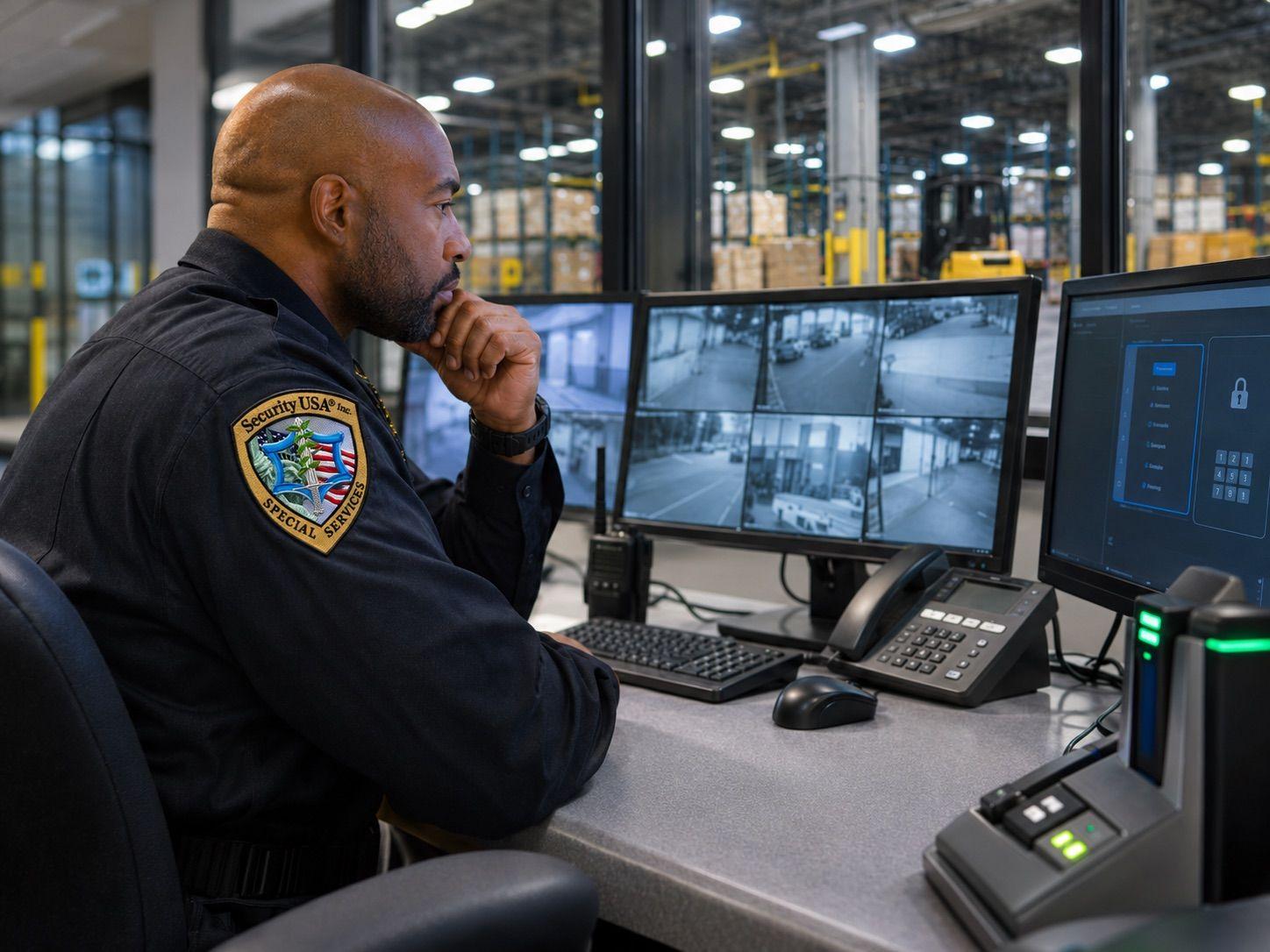
Large industrial and warehouse facilities can be difficult to monitor through physical patrols alone. Production areas, storage aisles, loading bays, employee entrances, exterior yards, and restricted inventory areas may require different forms of surveillance and access control. Integrated CCTV and access control systems can help management improve visibility, control authorized access, review incidents, and support onsite security personnel.
Remote monitoring can also provide additional oversight during periods when fewer people are present at the facility. The value of technology increases when it is connected to established security procedures. Officers and monitoring personnel should understand how to respond to alerts, document observations, and communicate concerns to the appropriate individuals. Cameras and access systems are most effective when they support an organized security operation rather than functioning independently of it.
Security officers need to understand the industrial environment
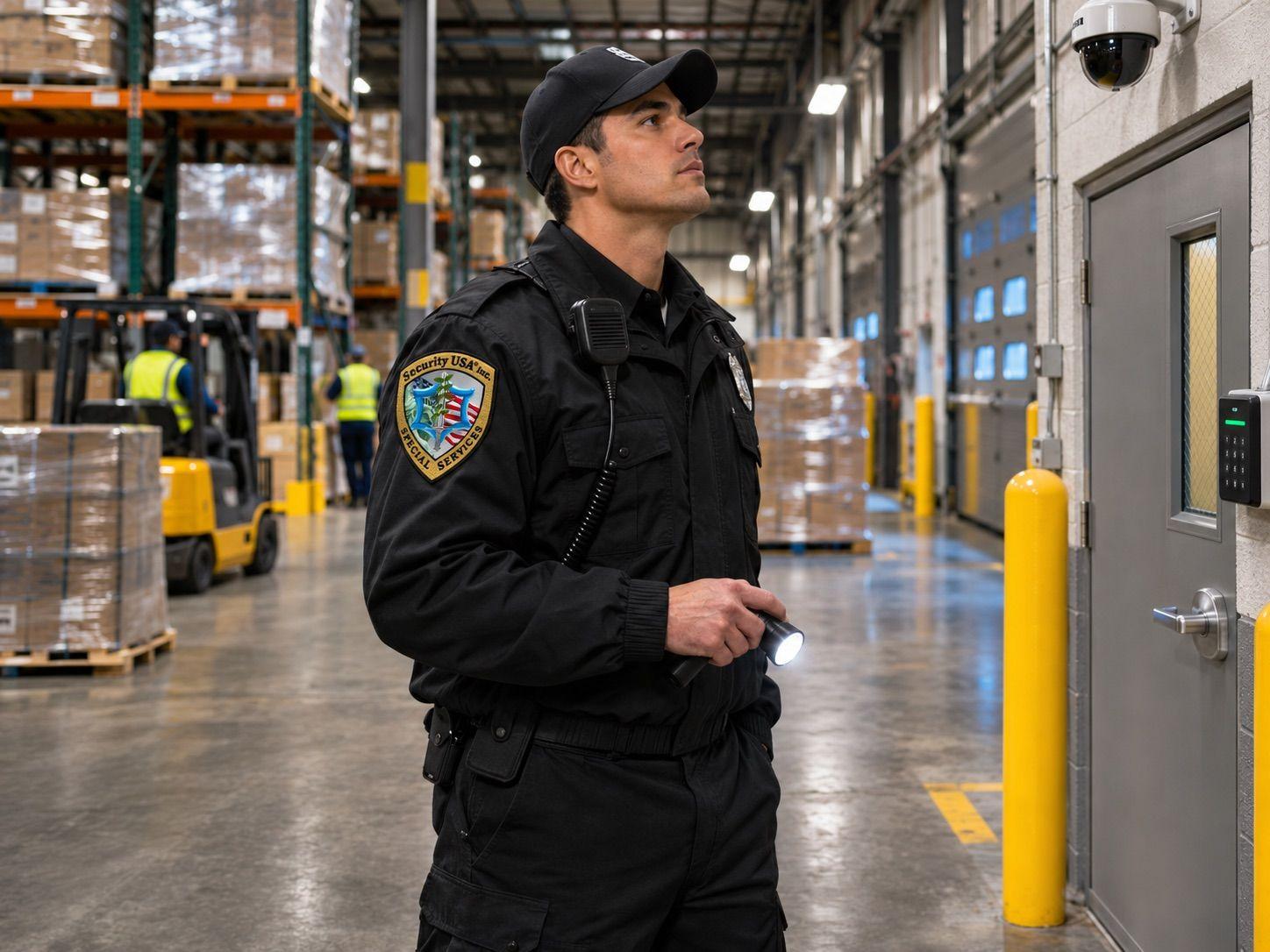
Industrial and warehouse security requires more than general guard experience. Officers may work around forklifts, heavy machinery, commercial vehicles, loading equipment, restricted production areas, and employees performing time-sensitive responsibilities. They need to understand the facility's safety rules, communication procedures, and operational boundaries. Security personnel should also be familiar with emergency reporting procedures and understand how to perform their duties without interfering with equipment operators or production teams.
As discussed in From the Assembly Line to the Frontline: Precision in Manufacturing Security, discipline, coordination, and clearly defined procedures are essential when security personnel operate within complex industrial environments. Those same principles apply to warehouses and distribution centers, where security must protect the facility without interfering with the processes that keep goods moving.
Seasonal demand and operational changes affect security needs
Industrial facilities and warehouses may experience substantial changes in activity during peak shopping periods, holidays, increased production cycles, and seasonal inventory fluctuations. Additional shipments, temporary employees, extended operating hours, and increased truck traffic can place greater pressure on existing security procedures. A facility that operates comfortably under its normal staffing model may need additional support during these busier periods. Security coverage should be reviewed before activity increases. Temporary adjustments to gate coverage, patrol responsibilities, visitor procedures, and monitoring can help management maintain consistent oversight as operational demands change. The security program should be flexible enough to support the business during both routine and high-volume periods.
Security planning should reflect the facility's vulnerabilities
Industrial properties vary significantly in size, layout, operational complexity, and the types of assets they protect. A manufacturing facility may prioritize access to production areas, machinery, and proprietary processes. A distribution center may require greater oversight of vehicle traffic, loading docks, and shipment activity. A warehouse storing valuable merchandise may place additional emphasis on restricted access and internal loss prevention. A professional security risk assessment can help management identify vulnerabilities, evaluate existing security measures, and determine where additional protection would provide the greatest operational value. Rather than applying the same coverage model to every industrial property, security planning should begin with an understanding of how the facility actually operates.
Build security around your industrial and warehouse operations
No two industrial facilities or warehouses operate exactly the same way. Facility size, inventory value, production activities, shipment volume, operating hours, workforce size, and surrounding conditions all influence the type of protection a property needs. Some facilities may benefit from dedicated gatehouse officers and mobile patrols. Others may require a combination of loading dock coverage, restricted access controls, surveillance technology, and centralized monitoring. The right security program should reflect those differences.
Security USA® Inc. helps industrial property owners, warehouse operators, manufacturers, logistics companies, and distribution center managers develop professional security programs that protect people, inventory, equipment, facilities, and daily operations. If you are reviewing your current industrial or warehouse security coverage or preparing for changes in operational demand, use the form below to discuss a security solution tailored to your facility.


