
Commercial Office Building Security Services That Support Daily Operations

Contractors show up for scheduled work. Employees leave late. Parking areas get busy. Building staff handle requests from multiple companies at the same time. When the security plan is weak, small problems start showing up quickly. A visitor gets waved through without a proper check-in. A vendor uses the wrong entrance. A tenant reports someone in a restricted area. A delivery blocks the lobby. A side door is left unsecured. Management hears about the problem after the fact instead of while it is still manageable.
For commercial properties using professional security services throughout New Jersey, the right security team can help protect tenants, support building operations, and keep daily activity from turning into confusion. At Security USA® Inc., we help commercial office buildings build security programs around access control, lobby presence, visitor management, vendor activity, tenant support, patrols, reporting, and daily operational discipline.
Commercial office security starts with access control
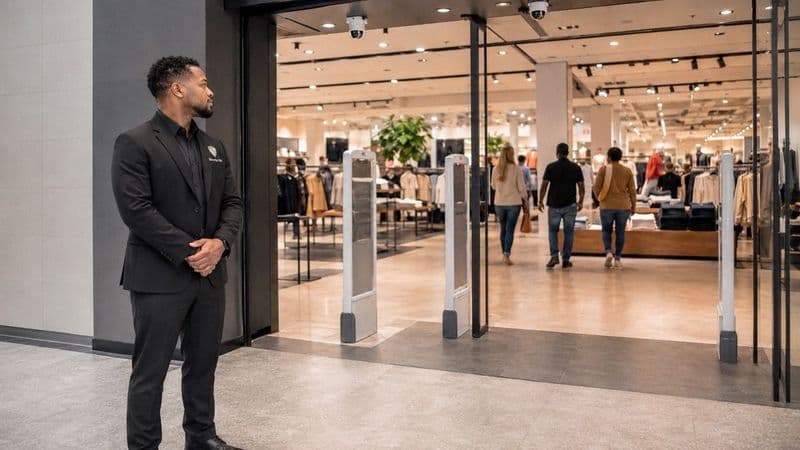
The lobby is usually the first place where a building’s security standards become visible. It is also where small failures can become larger issues. A commercial office building may have tenants with different schedules, visitors with appointments, vendors with deliveries, contractors with temporary access, and staff members moving quickly during peak hours. That movement needs structure. In commercial office building security, the goal is not to slow the building down. The goal is to keep the building moving without letting access become loose.
A professional security team can help support:
- visitor check-in
- tenant access procedures
- vendor verification
- contractor entry
- lobby monitoring
- after-hours access
- elevator or floor access rules
- package and delivery direction
- incident documentation
- communication with property management
A good access plan should feel clear to tenants, visitors, vendors, and staff. People should know where to enter, who to speak with, what is required, and what happens when something does not match the building’s rules.
Tenants notice when the building feels controlled
Security is part of the tenant experience. Tenants may not think about the security team every day, but they notice when the property feels disorganized. They notice when visitors are not checked properly. They notice when the lobby feels overwhelmed. They notice when after-hours access seems too casual. They notice when issues keep repeating without follow-up. That matters for property managers and ownership groups. A commercial office building is not just a physical asset. It is an operating environment for the companies inside it.
Professional security guard services can help protect that environment by creating visible presence, consistent procedures, and a reliable point of contact when something needs attention. The best security teams do not make the building feel rigid. They make it feel steady. Tenants should feel that the building is professionally managed, that access is being handled properly, and that management has control over the shared spaces they rely on every day.
Visitor management has to work during real traffic
Visitor management looks simple when the lobby is quiet. The real test happens during morning arrivals, lunch-hour movement, vendor activity, meetings, deliveries, and end-of-day traffic.
A workable visitor management plan should answer:
- who can approve visitors
- how visitors are verified
- where visitors wait
- when tenants are contacted
- how vendors are checked in
- what happens when a visitor is not expected
- how after-hours visitors are handled
- how incidents are documented
If the process only works when one person arrives at a time, it is not strong enough for a busy office building. Modern CCTV and access control systems can help support visibility around entrances, elevators, parking areas, loading zones, and restricted spaces. But technology cannot carry the entire process by itself. A camera can show activity. An access system can control certain doors. A trained security team connects those tools to the building’s actual procedures and daily conditions.

Vendors, contractors, and deliveries create daily pressure
Commercial buildings rely on outside activity. Cleaning crews, maintenance vendors, repair technicians, delivery drivers, contractors, building engineers, inspectors, and service providers may all need access at different times. That activity can create risk when it is not controlled.
A strong vendor and contractor process should define:
- where vendors enter
- how access is approved
- which areas vendors can use
- whether escorts are required
- how deliveries are handled
- how loading areas are monitored
- who is notified when work is complete
- what happens when someone arrives unexpectedly
Many security issues do not begin with a dramatic incident. They begin with someone being allowed into the wrong area, using the wrong entrance, or moving through the property without proper direction. Security should help prevent that. The right team gives property managers another layer of control without forcing building staff to handle every access question alone.
After-hours coverage requires a different posture
A commercial office building changes after normal business hours. The lobby gets quieter. Tenant activity slows down. Cleaning crews arrive. Some employees stay late. Contractors may need access. Parking areas may become less active. Side entrances and service areas can become more exposed. Security coverage should adjust to that shift.
After-hours security may need to focus on:
- lobby presence
- tenant and employee access
- contractor verification
- perimeter checks
- parking areas
- stairwells
- elevators
- loading areas
- unlocked doors
- unusual activity
- incident reporting
A daytime lobby plan may not be enough for overnight or weekend conditions. The building’s risk changes when fewer people are around, and the coverage plan should reflect that. A good security program should not treat the office building the same way at 10:00 a.m. and 10:00 p.m.
Property managers need clear reporting
Security should make property management easier, not harder. A property manager should not have to guess what happened during a shift, whether an incident was handled, who was notified, or whether the same issue keeps happening.
A professional security program should define how officers report:
- visitor issues
- tenant complaints
- suspicious activity
- access concerns
- vendor problems
- maintenance observations
- parking concerns
- unlocked doors
- after-hours activity
- emergency incidents
As discussed in Why Security Problems Often Start With Poor Communication, communication gaps often turn small operational problems into larger security concerns. Commercial office buildings need clean communication because multiple groups depend on the same property. Tenants, visitors, vendors, staff, building engineers, and property managers all need the security team to pass along the right information at the right time.

Parking areas and exterior spaces should not be ignored
The security experience does not begin and end in the lobby. Parking lots, garages, sidewalks, drop-off areas, loading areas, service entrances, and exterior walkways can all affect how safe and organized the building feels.
Common concerns may include:
- unauthorized parking
- suspicious vehicles
- poorly lit areas
- tenant safety concerns
- late-night employees walking to vehicles
- delivery congestion
- blocked entrances
- loitering
- after-hours activity
- exterior door issues
A strong commercial office security plan should include exterior awareness. Tenants and visitors often form an opinion about the property before they reach the front desk. If the parking area or entrance feels uncontrolled, that reflects on the building.
Security should fit the building’s actual use
Not every office building needs the same plan. A multi-tenant office tower does not operate like a small professional building. A medical office property may have different visitor flow than a corporate headquarters. A mixed-use property may have office, retail, parking, and residential activity happening at the same time.
A site-specific security plan should review:
- tenant mix
- lobby traffic
- visitor volume
- access points
- elevators
- parking layout
- loading areas
- after-hours activity
- vendor routines
- prior incidents
- tenant complaints
- management expectations
The best plan is not the most complicated plan. It is the plan that matches the building’s real rhythm. Security should be designed around the way people actually use the property every day.
Why this matters now
Commercial office buildings are expected to feel safe, efficient, professional, and well managed. Tenants want confidence. Visitors want clear direction. Vendors need structure. Staff need support. Property managers need visibility. Ownership needs a building that protects both people and reputation. Professional office building security helps reduce daily friction by supporting access control, visitor management, lobby presence, vendor coordination, reporting, patrols, and after-hours coverage. The strongest security teams do not make the building feel locked down. They help it feel controlled, responsive, and easier to operate.