
How Security Impacts Property Value and Leasing Performance
For commercial buildings, residential communities, mixed-use developments, and retail properties, security directly influences how tenants, residents, visitors, and prospective clients perceive the property itself.
A well-managed security program can help strengthen tenant confidence, improve leasing performance, support retention, and reinforce the overall reputation of a property over time.
For many properties using professional security guard services across New Jersey, security has become an operational investment tied closely to long-term occupancy and property value rather than simply a preventative expense.
At Security USA® Inc., we work with properties that understand security is often one of the first operational factors tenants evaluate when deciding whether to lease, renew, or recommend a building.
Security Influences First Impressions
Prospective tenants often form opinions about a property within minutes of arriving on-site.
Visible security presence, organized lobby operations, controlled access points, and professional personnel all contribute to how safe and professionally managed a property appears.
Buildings that lack operational visibility or security structure can unintentionally create concerns around:
- tenant safety
- after-hours access
- visitor management
- package handling
- parking security
- emergency response
For many properties, professionally managed security guard services help create stronger daily visibility while reinforcing operational professionalism throughout the property.
This becomes especially important for higher-traffic environments such as commercial office buildings, where tenants expect organized building operations and responsive on-site support.
Leasing Performance Is Tied to Tenant Confidence
Leasing performance is not driven solely by amenities, square footage, or location.
Tenants also evaluate whether a property feels secure, professionally managed, and operationally reliable.
Businesses leasing office space increasingly ask questions about:
- building access procedures
- overnight coverage
- visitor policies
- incident response
- surveillance systems
- parking garage safety
- lobby staffing
Properties with visible security structure often create stronger confidence during the leasing process because prospective tenants can immediately see operational oversight in place.
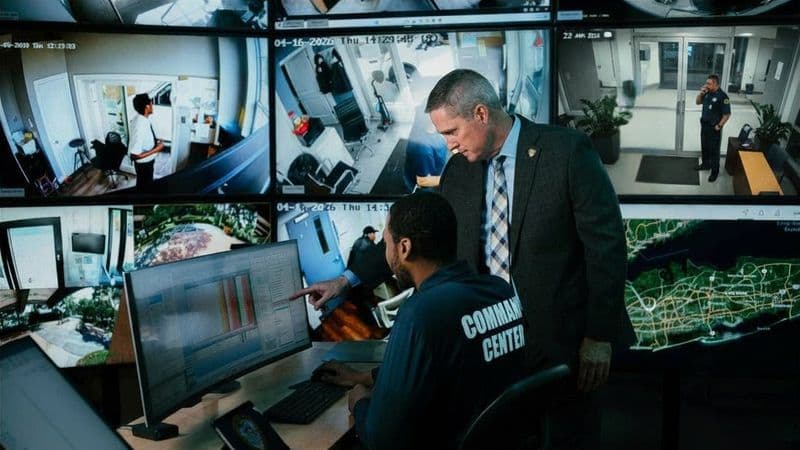
This is one reason many properties invest in CCTV and access control systems alongside trained on-site personnel to support both security and tenant experience.
Tenant Retention Is Often Connected to Security Quality
Security problems can directly affect tenant retention over time.
Recurring issues such as unauthorized visitors, theft, poor lobby management, inconsistent patrols, or delayed response times can gradually reduce confidence in building management.
As discussed in What Property Managers Should Look for Before Hiring a Security Company, long-term property performance often depends on consistency, communication, and operational accountability rather than simply staffing coverage alone.
Commercial and residential property managers are under increasing pressure to:
- maintain occupancy
- improve tenant satisfaction
- reduce operational disruptions
- strengthen property reputation
- improve resident and tenant experience
Properties that maintain organized security operations are often better positioned to support long-term tenant retention and stronger leasing stability.
Professional Security Presence Supports Property Reputation
Security personnel are often among the most visible representatives of a property.
Their professionalism, responsiveness, appearance, and communication directly affect how tenants and visitors view the building overall.
For many higher-end properties, this extends beyond security alone and becomes part of the broader service experience.
Professionally managed doorman and concierge services can help improve front desk operations, visitor coordination, tenant assistance, and overall property presentation.
This is especially relevant for residential buildings and mixed-use developments where resident experience plays a major role in retention and long-term property perception.
Modern Properties Expect Better Operational Oversight
Today’s tenants and property managers expect stronger visibility into how security operations are managed.
This includes:
- incident reporting
- patrol verification
- communication procedures
- escalation response
- workforce coordination
- after-hours oversight
Properties that lack operational accountability often struggle with inconsistency across shifts and reduced tenant confidence.
Solutions such as Integrated Management Systems help properties improve reporting visibility, workforce coordination, and overall operational consistency across larger environments.
Many property managers are also reevaluating how operational structure impacts long-term performance, especially as leasing competition continues increasing across major markets.
Security Impacts More Than Safety Alone
Modern security programs now influence multiple aspects of property performance simultaneously.
A professionally managed security strategy can help support:
- tenant retention
- leasing performance
- operational consistency
- visitor experience
- liability reduction
- property reputation
- overall building perception
As discussed in How Security Guards Improve Tenant Retention in Commercial Buildings, tenants are significantly more likely to remain at properties where operations feel organized, responsive, and professionally managed.
This is why many property owners now view security as part of long-term asset performance rather than simply a reactive operational necessity.
Why This Matters Now
Commercial and residential tenants have become increasingly selective about the properties they occupy.
Security expectations continue evolving alongside rising concerns around operational reliability, workplace safety, tenant experience, and property management standards.
Buildings that maintain visible security presence, stronger operational coordination, controlled access, and responsive incident management are often viewed as safer and more professionally managed overall.
As leasing competition continues increasing across many markets, properties that invest in stronger operational security strategies are often better positioned to maintain occupancy and long-term tenant confidence.