
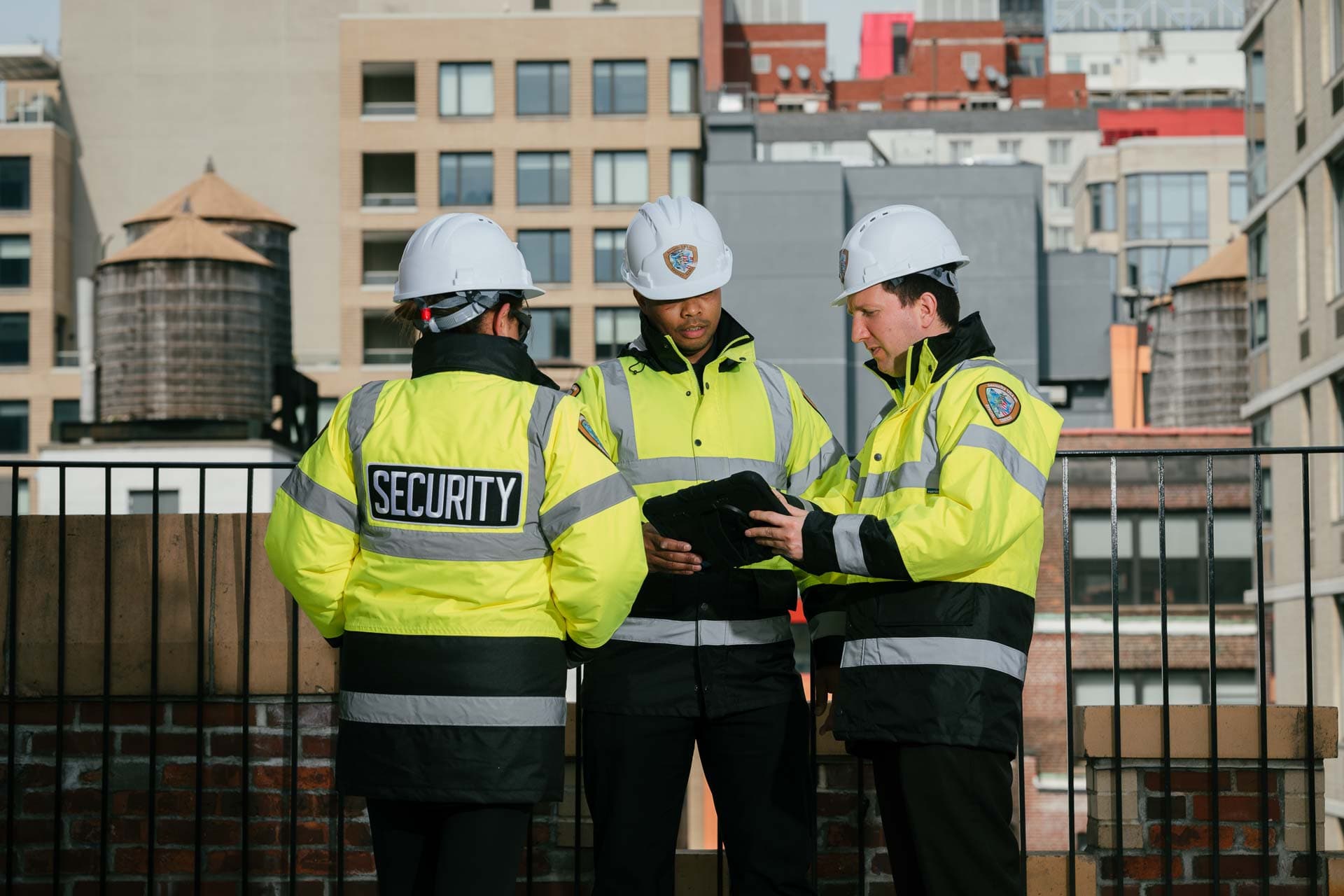
Construction Site Security Guide: Theft Statistics, Guard Coverage, Cameras & Access Control
That makes construction sites attractive targets for theft, vandalism, trespassing, and after-hours activity.
For contractors, developers, and property owners, theft is not only a replacement-cost problem. A stolen machine, missing tools, or stripped materials can delay schedules, interrupt trades, complicate insurance claims, and increase project pressure.
This guide brings together construction site theft statistics, common stolen assets, guard coverage options, access control, camera surveillance, physical deterrents, and after-hours protection planning.
For active projects using licensed security services throughout New York, the goal is to reduce theft exposure before it becomes a schedule, safety, or insurance problem.
At Security USA® Inc., we support construction site security with practical security plans built around site layout, project phase, equipment value, access points, and after-hours risk.
Construction Site Theft Statistics
Construction theft data varies because not every incident is reported, and some sources separate heavy equipment theft from tools, materials, vehicles, and vandalism. Still, several numbers show why jobsite security deserves serious attention.
Key construction site theft statistics include:
- Heavy equipment theft is estimated to cost the industry roughly $300 million to $1 billion per year in the United States. [1]
- More than 11,000 thefts occurred at construction sites in 2021, according to FBI data cited by Great American Insurance Group. [2]
- A construction theft study analyzing more than 15,000 NIBRS incidents found that contractors lost about $6,000 per theft incident on average. [3]
- In that same study, trucks were the most expensive theft target, with average losses of about $42,000 per incident. [3]
- Recovery across all stolen construction targets was under 7% in the NIBRS-based study. [3]
- Commonly stolen construction assets include power tools, copper, lumber, generators, loaders, skid steers, excavators, trailers, doors, windows, plumbing supplies, and fixtures. [2][4]
The takeaway is simple: construction sites are vulnerable because they often contain high-value, movable assets in environments that change by the week.
Why Construction Sites Are High-Risk After Hours
A finished commercial property usually has defined entrances, lighting, cameras, access systems, tenants, staff, and operating procedures.
A construction site often has temporary fencing, shifting gates, changing crews, staged materials, shared access points, and equipment left where work ended that day.
After-hours risk increases when:
- the site is unattended overnight
- materials are staged before installation
- lighting is weak or uneven
- fencing has gaps or weak points
- equipment sits near the perimeter
- multiple trades use the same access points
- tools are stored in trailers or containers
- cameras are not monitored
- weekends or holidays create longer inactive periods
A few minutes can be enough to remove tools, copper, fuel, smaller equipment, or materials. Larger thefts may involve trailers, trucks, or heavy machinery.
Most Commonly Stolen Construction Assets
Construction theft often targets items that are valuable, portable, easy to resell, difficult to trace, or expensive enough to justify the risk.
Commonly stolen assets include:
- power tools
- copper wire and piping
- lumber
- generators
- fuel
- skid steers
- loaders
- excavators
- backhoes
- trailers
- doors and windows
- plumbing supplies
- electrical supplies
- appliances and fixtures
- GPS and survey equipment
Heavy equipment gets attention because the replacement cost is high, but smaller tools and materials can create serious disruption too. A missing generator, stolen copper, or removed equipment attachment can delay work across multiple trades.
Guard Coverage: When Physical Security Makes Sense
Not every job site needs the same level of guard coverage.
A small daytime renovation may not need dedicated overnight personnel. A larger commercial project with expensive equipment, staged materials, exposed access points, or prior theft concerns may need a stronger plan.
Guard coverage makes sense when the site has:
- high-value equipment left overnight
- copper, lumber, appliances, or fixtures staged before installation
- open or difficult-to-secure access points
- prior theft, vandalism, trespassing, or loitering
- poor visibility from nearby roads
- multiple subcontractor entry points
- overnight, weekend, or holiday exposure
- costly schedule risk if equipment or materials disappear
Professional security guard services can support construction sites by controlling access points, documenting activity, monitoring deliveries, conducting patrols, reporting suspicious activity, and escalating concerns.
The strongest guard plan defines where officers are positioned, what gets patrolled, what gets documented, and who gets notified when something is wrong.
Mobile Patrol vs. Dedicated Onsite Guards
Construction sites usually need coverage based on risk, not guesswork.
Mobile patrol may make sense when the site needs periodic visibility, gate checks, perimeter checks, and after-hours inspection.
Dedicated onsite guards may make more sense when the site has high-value equipment, repeated losses, open access points, active threats, or expensive materials staged overnight.
A simple breakdown:
- Mobile patrol supports deterrence and periodic inspection.
- Dedicated onsite guards support continuous presence and faster response.
- Camera monitoring supports visibility and event detection.
- Access control supports entry discipline.
- A written site security plan connects all of those pieces.
Many sites need a combination, especially during high-risk phases or long inactive periods.
Access Control for Job Sites
Access control on a construction site is harder than access control in a finished building.
The site changes. Crews change. Vendors change. Deliveries change. Temporary entrances may open and close as work progresses.
A jobsite access plan should define:
- approved entry points
- gate opening and closing procedures
- visitor sign-in rules
- vendor and delivery verification
- subcontractor access rules
- after-hours access approval
- restricted areas
- equipment storage areas
- who may remove tools or materials
- who gets notified when something unusual happens
Modern CCTV and access control systems can help support stronger visibility around gates, entrances, trailers, material storage areas, and equipment zones.
But access control cannot rely only on technology. If gates are held open, keys are shared, vendors bypass check-in, or after-hours access is not documented, the site remains exposed.
Camera Surveillance and Remote Monitoring
Camera surveillance can help deter theft, document incidents, and give project teams better visibility after hours.
Cameras are often useful around:
- main gates
- equipment areas
- storage containers
- trailers
- fuel storage
- perimeter gaps
- loading areas
- temporary offices
- high-value material staging
- access roads
The limitation is simple: cameras only create value if someone can use the information.
A camera that records a theft but is not reviewed until the next morning may help with documentation, but it may not prevent the loss.
For higher-risk sites, central monitoring and control can help support after-hours awareness, escalation, and communication when activity occurs outside normal work hours.
Some sites may also benefit from newer tools such as GPS, RFID, Bluetooth tracking, geofencing, AI detection sensors, and automated alerts when used as part of a broader security plan. [4][5]
Lighting, Fencing, Gates, and Signage
Construction site security should start with basic controls.
A site with poor lighting, weak fencing, open gates, and unclear signage is easier to target than a site that appears controlled and monitored.
Practical controls include:
- perimeter fencing
- locked gates
- controlled access points
- motion lighting
- temporary flood lighting
- visible cameras
- warning signs
- locked storage containers
- trailer locks
- equipment immobilization
- key control
- organized material staging
- clear visitor and vendor instructions
The purpose is not to make theft impossible.
The purpose is to make the site harder to enter, harder to move through, harder to steal from, and easier to investigate if something happens.
After-Hours and Weekend Protection Checklist
Before crews leave for the day, the site should be secured against the most likely theft and trespass risks.
Use this checklist:
- Lock all gates, trailers, containers, offices, and storage areas.
- Check fencing for gaps, cuts, or weak points.
- Move high-value equipment away from the perimeter.
- Park equipment in well-lit or controlled areas.
- Remove keys from machines and vehicles.
- Secure tools, copper, wiring, fixtures, and smaller materials inside locked storage.
- Confirm camera views are not blocked.
- Check lighting around gates, storage areas, and equipment zones.
- Document high-value assets left onsite.
- Confirm who is authorized for after-hours entry.
- Confirm the escalation process for suspicious activity or attempted entry.
- Schedule guards, mobile patrol, or monitoring for higher-risk periods.
Holiday weekends, seasonal downtime, and pauses between trade activity should be treated as higher-risk coverage windows.
Construction Site Security Plan Template
A construction site security plan should be written, practical, and easy for the project team to follow.
Use this framework:
1. Site Overview
Document:
- project address
- project phase
- project manager contact
- superintendent contact
- emergency contacts
- active work hours
- after-hours risk periods
- site boundaries
- nearest cross streets
2. Site Assets
List what needs protection:
- heavy equipment
- trailers
- generators
- vehicles
- tools
- copper and wiring
- lumber
- fixtures
- appliances
- fuel
- high-value materials
- temporary offices
- completed work areas
The list should be updated as the project changes.
3. Access Points
Identify:
- main gate
- secondary gates
- pedestrian access
- delivery access
- subcontractor entry
- emergency access
- temporary openings
- weak points in fencing or perimeter control
Each access point should have a clear rule.
4. Guard and Patrol Coverage
Define:
- onsite guard hours
- patrol schedule
- mobile patrol frequency
- post location
- patrol routes
- restricted areas
- gate procedures
- reporting requirements
- supervisor check-ins
For larger projects, risk assessment services can help identify where coverage, lighting, access control, or monitoring should be strengthened.
5. Camera and Monitoring Plan
Document:
- camera locations
- areas covered
- alert procedures
- who reviews footage
- who receives notifications
- what happens when suspicious activity is detected
6. Inventory and Documentation
Track:
- serial numbers
- photos of equipment
- identifying marks
- delivery logs
- tool check-in and check-out
- material staging records
- vehicle access
- incident reports
- police reports
- insurance documentation
Good documentation helps with prevention, recovery, investigation, and claims support.
7. Reporting and Escalation
Define how the site reports:
- trespassing
- attempted entry
- open gates
- damaged fencing
- missing tools
- missing materials
- suspicious vehicles
- lighting failures
- unlocked trailers
- camera obstruction
- safety hazards
The plan should also identify who gets contacted first and when law enforcement should be called.
When to Review a Construction Site Security Plan
Construction sites change quickly.
Review the security plan when:
- the project enters a new phase
- high-value materials arrive
- copper, wiring, fixtures, or appliances are staged
- equipment is left overnight
- the site layout changes
- new access points are added
- theft, vandalism, or trespassing occurs
- a holiday weekend is approaching
- the site will be inactive for several days
- nearby properties report suspicious activity
Security should move with the project.
The biggest mistake is treating the site like it has the same risk level from start to finish.
Practical Next Step
Construction site security should be reviewed before high-value materials, tools, equipment, or fixtures are left exposed after hours.
Contractors, developers, and property owners should evaluate the site’s access points, lighting, fencing, camera coverage, guard needs, after-hours procedures, and reporting process before theft creates a project delay.
The best plan is not the longest plan. It is the plan that reflects the site’s real layout, current project phase, most valuable assets, and highest-risk time periods.
Sources / Citations
[1] National Equipment Register / Verisk, Theft Prevention & Recovery Solutions
[2] Great American Insurance Group, Construction Site Security
[3] Shrestha, Joseph and Osborne, Dustin Lee. An Exploratory Look at Thefts from Construction Sites
[4] Ascot Group, Protecting Your Construction Site from Theft
[5] Great American Insurance Group, Effective Strategies to Help Prevent Theft on Your Construction Site