
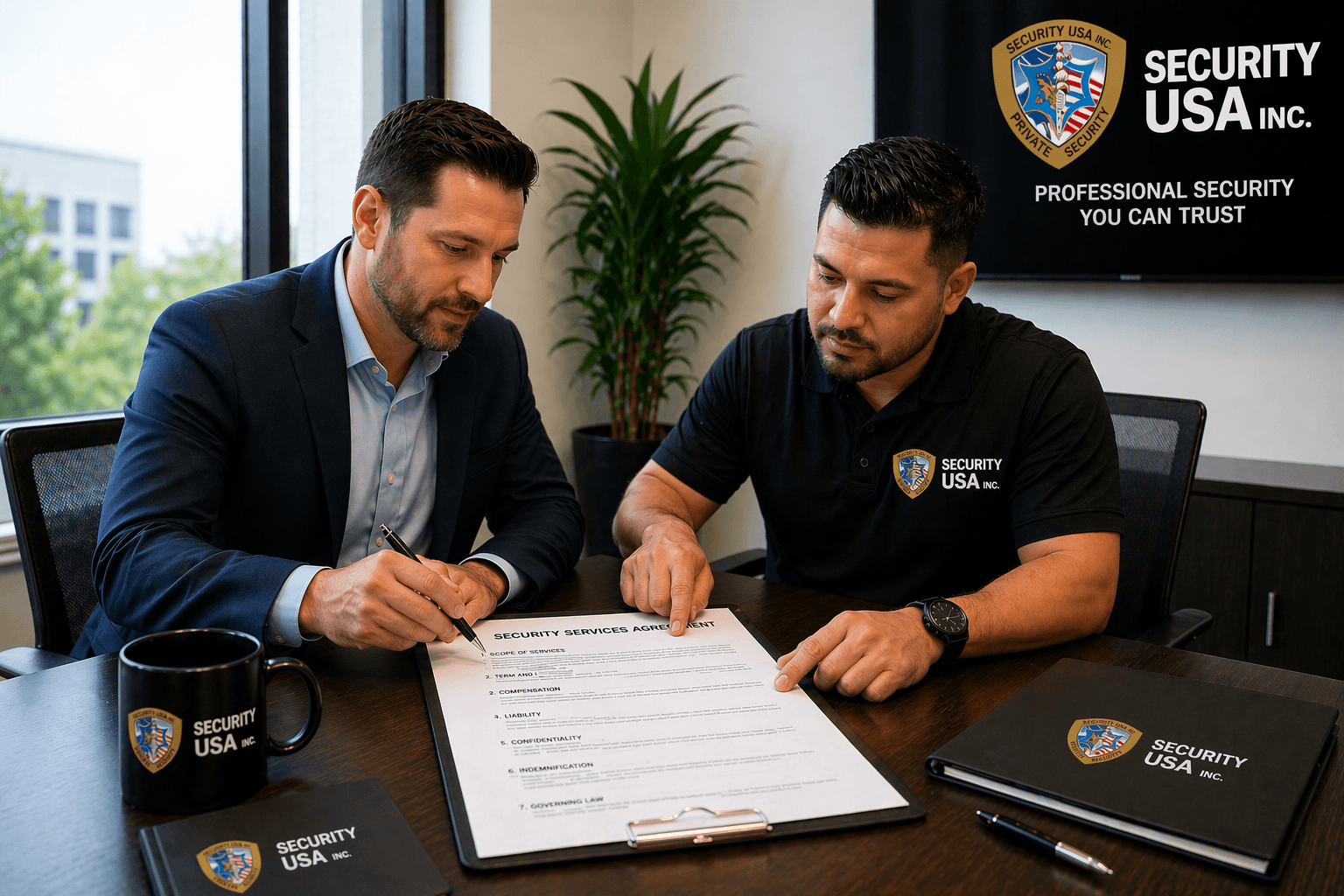
Choosing the Right Security Vendor: What You Must Know Before You Sign
For property managers and decision makers across New York, the difference between the right vendor and the wrong one becomes clear quickly. One delivers consistency and control. The other creates gaps, frustration, and unnecessary risk.
At Security USA® Inc., we often work with clients who are transitioning away from underperforming providers. In most cases, the issues could have been avoided with a more structured evaluation process upfront.
Here is what you need to know before you sign.
1. Look Beyond Price and Focus on Structure
Cost is always a factor, but choosing a vendor based on price alone often leads to long-term problems.
Lower cost providers typically lack:
- Proper supervision
- Consistent training
- Clear operational structure
Instead, focus on whether the company has defined processes, reporting systems, and oversight in place.
For example, vendors that use tools like a Guard Management System provide greater accountability and transparency across daily operations.
2. Evaluate Their Approach to Staffing
The quality of your security program depends heavily on the people assigned to your property.
Ask questions like:
- How are officers recruited and trained?
- What standards are used for hiring?
- How does the company ensure consistency across shifts?
In industries such as Industrial & Manufacturing, where operational risks are higher, strong staffing practices are essential.
A vendor without a structured staffing approach will struggle to deliver consistent results.
3. Make Sure They Can Scale With Your Property
Your property will not stay the same. Occupancy changes, traffic increases, and operational demands evolve.
The vendor you choose should be able to:
- Adjust staffing levels when needed
- Support new operational requirements
- Handle periods of increased activity
Services like Special Event Security are a good indicator of flexibility, especially for properties that host events or experience seasonal demand shifts.
A rigid vendor will eventually become a limitation.
4. Understand Their Use of Technology
Modern security programs rely on more than just manpower.
Ask whether the vendor integrates:
- Monitoring systems
- Access control solutions
- Reporting tools
Solutions like Central Monitoring Control help ensure real-time oversight and faster response, especially in larger or more complex properties.
A vendor that does not leverage technology will struggle to keep up with modern expectations.
5. Review Their Communication and Reporting
One of the biggest frustrations property managers face is lack of communication.
Before signing, confirm:
- How often reports are provided
- How incidents are documented
- Who your point of contact will be
- How quickly issues are escalated
Clear communication is critical in sectors like School Security & Educational Institutions, where coordination and transparency are essential.
If communication is unclear during the sales process, it will likely be worse after the contract is signed.
6. Look for Long Term Partnership, Not Just Coverage
The best security vendors do not just provide guards, they act as partners in your operations.
A strong partner will:
- Identify risks proactively
- Suggest improvements
- Adapt to your property’s needs
- Maintain consistent standards over time
This level of involvement is what separates basic coverage from a professional security program.
Why This Decision Matters
Choosing the wrong vendor can lead to:
- Increased incidents and liability
- Frustration from tenants or staff
- Inconsistent performance
- Higher long-term costs
Choosing the right one creates:
- Stability in operations
- Better communication
- Stronger overall control
- Improved tenant or visitor experience
This is not just a contract, it is a long-term operational decision.
If you are evaluating security vendors or considering a change, taking the time to choose the right partner will make a measurable difference.