
How Access Control Failures Create Security Risks for Commercial Properties
When it works properly, tenants, employees, visitors, vendors, and contractors move through the property in a controlled and organized way. When it fails, unauthorized access, operational confusion, tenant concerns, and security risks can increase quickly.
For commercial property owners and managers, access control is not only a technology issue. It is an operational issue that affects safety, tenant confidence, liability exposure, and the overall professionalism of the building.
For properties using licensed security services throughout New Jersey, strong access control procedures can play a major role in protecting commercial buildings, office environments, and high-traffic facilities.
At Security USA® Inc., we help properties strengthen access control by combining trained personnel, monitoring procedures, technology, and site-specific security planning.
Access Control Failures Often Start Small
Many access control problems do not begin as major incidents.
They often start with small gaps that become normal over time.
This may include:
- side doors being left unsecured
- visitors bypassing the front desk
- expired credentials still working
- vendors entering without proper verification
- tenants propping doors open
- weak after-hours procedures
- poor communication between shifts
- limited visibility into who entered the property
Individually, these issues may seem minor. Together, they can create significant security exposure.
Access control failures become especially concerning when management does not have a clear way to identify, document, and correct recurring problems.
Weak Entry Management Creates Unauthorized Access Risk
Commercial properties often have multiple entry points.
This may include front entrances, side doors, parking garages, loading docks, employee entrances, service corridors, stairwells, and restricted areas.
If those access points are not properly managed, unauthorized individuals may move through the property without being noticed.
That risk can affect:
- tenant suites
- employee areas
- storage rooms
- mechanical spaces
- executive offices
- parking areas
- delivery zones
- sensitive business operations
Modern CCTV and access control systems can help properties monitor entry activity, control access points, support investigations, and improve overall visibility across the building.
The goal is not only to lock doors. The goal is to understand how people are moving through the property and where security gaps may exist.
Commercial Buildings Need Clear Visitor Procedures
Visitor management is one of the most common access control challenges in commercial properties.
A busy office building may receive clients, vendors, contractors, delivery personnel, job applicants, consultants, and guests throughout the day.
Without clear procedures, visitor activity can become difficult to manage.
Common problems include:
- visitors entering without check-in
- unclear approval procedures
- inconsistent front desk instructions
- poor vendor verification
- weak delivery controls
- no clear after-hours visitor process
- limited documentation of who entered the property
This is especially important for commercial office buildings, where access control directly affects employee safety, tenant confidence, visitor experience, and professional building operations.
A strong access control plan should make visitor movement organized, documented, and easy for property management to review.
Technology Alone Does Not Solve Access Control Problems
Access control technology is valuable, but technology alone does not guarantee a secure building.
Even strong systems can fail if procedures are weak.
A property may have cameras, card readers, controlled doors, visitor systems, and monitoring tools but still experience security issues if:
- officers are not trained properly
- reports are not reviewed
- access exceptions are not documented
- supervisors are not involved
- tenants ignore procedures
- credentials are not updated
- alarms are not escalated quickly
As discussed in Security Guards vs. Technology in 2026: Why Your Property Needs Both to Stay Protected, the strongest security programs combine trained personnel with technology instead of relying on one solution alone.
Technology should support decision-making, response, and accountability. It should not replace professional oversight.
Poor Monitoring Can Delay Response
Access control failures become more dangerous when no one identifies them quickly.
If a door alarm goes unnoticed, a camera feed is not reviewed, or suspicious activity is not escalated, the property may lose valuable time before responding.
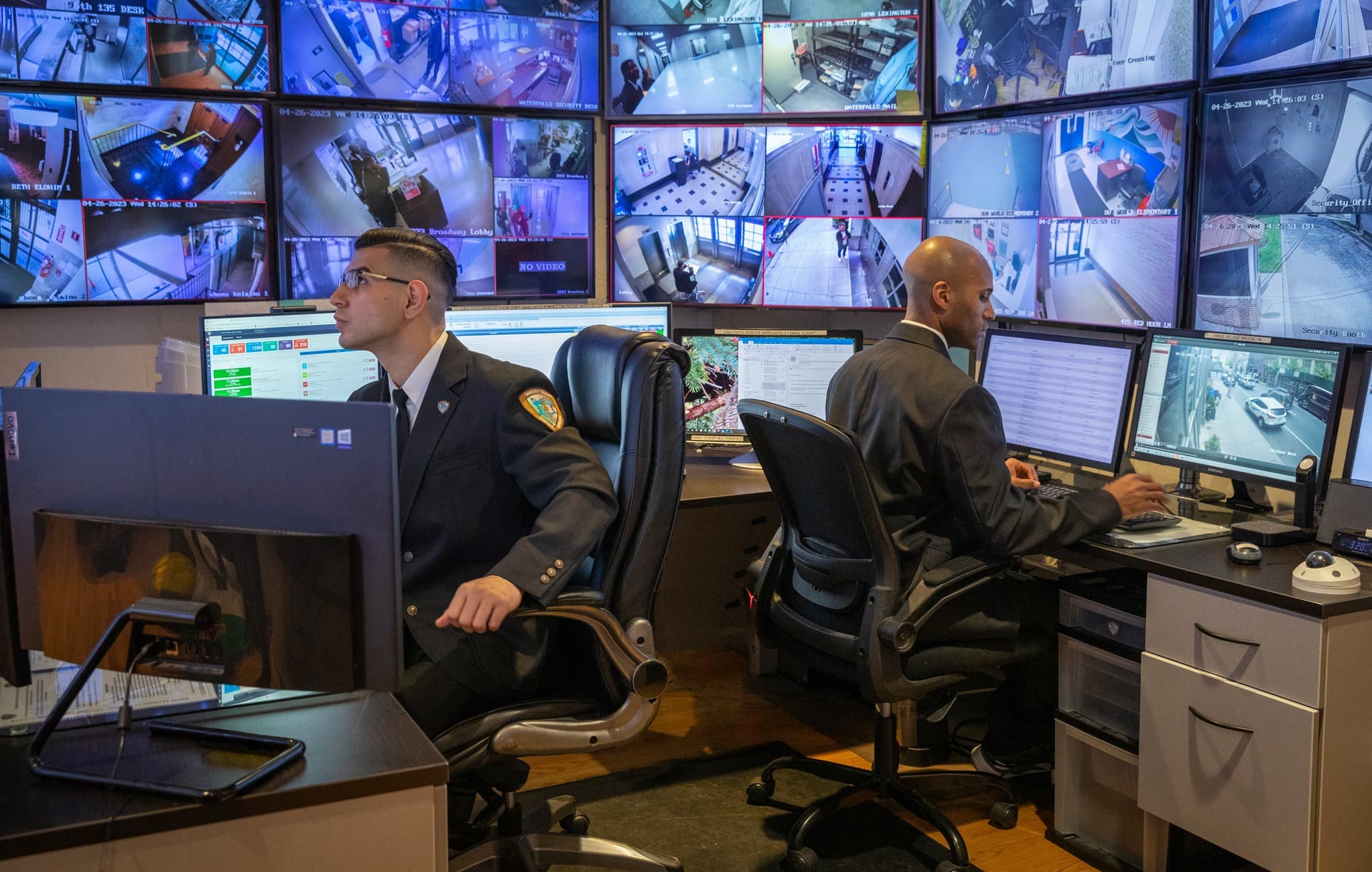
This is where central monitoring and control can help properties improve awareness, escalation, and coordination when access-related concerns occur.
Stronger monitoring can support faster response to:
- unauthorized entry attempts
- after-hours movement
- forced doors
- parking garage activity
- loading dock issues
- suspicious visitor behavior
- restricted area access
Fast awareness matters because access problems often become more serious the longer they go unaddressed.
Outdated Systems Can Create Hidden Vulnerabilities
Some commercial properties continue using outdated access control systems that no longer match the building’s current risk profile.
This may include older card systems, limited camera coverage, weak credential management, inconsistent door monitoring, or disconnected systems that do not communicate well with security teams.
Outdated systems can create problems such as:
- inactive employees retaining access
- limited visibility into entry logs
- poor documentation after incidents
- blind spots near entrances
- delayed access revocation
- inconsistent monitoring
- weak after-hours control
As discussed in Growing Video Surveillance Industry, surveillance and security technology continue evolving because properties need stronger visibility, faster awareness, and better tools to support protection.
Commercial property managers should regularly evaluate whether their technology still supports the way the building operates today.
Sensitive Commercial Environments Need Stronger Control
Some commercial properties face higher consequences when access control fails.
For example, financial institutions often require stronger attention to restricted access, documentation, employee safety, customer flow, and procedural discipline.
In these environments, access control is not only about convenience. It is part of the property’s broader security and operational risk strategy.
A weak access control process can create exposure involving:
- sensitive work areas
- employee-only zones
- cash-handling environments
- customer-facing spaces
- records or equipment
- restricted offices
- after-hours activity
Properties with higher-risk operations need security procedures that are clear, enforced, documented, and regularly reviewed.
Facial Recognition Can Support Stronger Access Verification
Some properties need more advanced identity verification at access points.
In the right environments, facial recognition technology can help support controlled access, improve identification procedures, and strengthen visibility into who is entering sensitive areas.
This type of technology may be useful for properties that need added access control support around:
- restricted entrances
- employee-only areas
- executive spaces
- high-value assets
- controlled tenant environments
- sensitive commercial operations
Technology should always be implemented carefully and appropriately based on the property’s needs, but advanced access tools can help strengthen security when standard procedures are not enough.
Access Control Failures Affect Tenant Confidence
Tenants expect commercial properties to manage entry points professionally.
When tenants notice access control issues, they may begin questioning the overall quality of property management.
This can happen when:
- unauthorized visitors appear on tenant floors
- front desk procedures feel inconsistent
- doors are frequently left unsecured
- after-hours access feels poorly managed
- parking areas feel uncontrolled
- vendors move through the building without verification
- security response is delayed
Access control failures can quickly affect how tenants view the safety and professionalism of the property.
For property owners and managers, this matters because tenant confidence influences lease renewals, employee comfort, property reputation, and long-term leasing performance.
Access Control Should Be Reviewed Regularly
Access control should not be treated as a one-time setup.
Properties change over time.
Tenants move in and out. Employee lists change. Visitor activity increases. Vendors rotate. Parking demands shift. New risks emerge. Building operations evolve.
This is why risk assessment services can help commercial properties identify weaknesses in access points, visitor procedures, technology coverage, after-hours controls, and overall security planning.
Regular review helps property managers catch vulnerabilities before they become incidents.
A strong access control strategy should evolve with the property.
Why This Matters Now
Commercial properties are under increasing pressure to maintain safer, more organized, and more professionally managed environments.
Tenants expect controlled entry, clear visitor procedures, monitored access points, responsive security personnel, and reliable building operations.
Access control failures can quietly create risk before a major incident occurs.
The strongest commercial security programs combine technology, trained personnel, monitoring, documentation, and ongoing review to make sure access procedures actually work in daily conditions.